Furniture removals Drayton Park stairs and parking issues: a practical guide for smoother moves
Moving a sofa down three narrow flights of stairs while trying not to block a busy street is one of those jobs that sounds simple until you're standing in the hallway, sweating, with a wardrobe that suddenly feels twice as heavy. That is exactly why Furniture removals Drayton Park stairs and parking issues deserve proper planning. In this guide, we'll break down what makes these moves trickier than average, how a professional team handles them, and what you can do to avoid delays, damage, and stress on the day. If you're in a top-floor flat, a converted house, or a place with awkward roadside access, this is for you.
You'll also find a sensible step-by-step process, a realistic comparison of moving methods, a practical checklist, and answers to the questions people usually ask at the last minute. Because let's face it, the last minute is often when the parking space disappears.
Why Furniture removals Drayton Park stairs and parking issues Matters
Stairs and parking are the two things that quietly turn a standard furniture removal into a logistical puzzle. One affects safety and handling; the other affects timing, access, and how close the vehicle can get to the property. Put them together and you can easily lose an hour before the first item even reaches the van.
In Drayton Park, the challenge is usually not just the furniture itself. It's the whole movement path: from room to hallway, down stairwells, out through shared entrances, onto the pavement, and finally into a suitable loading position. If any part of that chain is awkward, the whole move slows down. A bulky ottoman bed, a large mirror, a dining table with no detachable legs, or a heavy chest of drawers can become a real problem when the stairwell turns sharply or the parking bay is far from the door.
Why does this matter so much? Because damage rarely happens during the "lifting" alone. It often happens during turning, resting, squeezing past bannisters, or carrying for longer than expected because the van is parked too far away. A good removal plan reduces those pinch points before they become expensive mistakes.
It also matters for neighbours and building management. Nobody wants a hallway blocked for ages, a van idling in the wrong place, or a moving team dragging items across a shared entrance. A tidy, efficient move is simply easier on everyone. And honestly, it makes the day feel calmer straight away.
How Furniture removals Drayton Park stairs and parking issues Works
The best furniture removals for stair-heavy or parking-restricted properties are planned around access first, not last. That means the team looks at the route before they start lifting anything. It sounds obvious, but it's one of the biggest differences between a smooth move and a miserable one.
Typically, the process starts with a quick review of the property details: floor level, stair width, landing space, lift access if any, item sizes, and whether there is a safe place to stop the van close by. If parking is tight, the team may need to plan for a longer carry, a timed arrival, or a van positioned so loading can happen efficiently without causing a nuisance.
For furniture moves with awkward stairs, the crew may use protective blankets, straps, dollies where appropriate, and a "two-person" handling method for large or fragile items. Smaller items can be moved more quickly, but the bulky stuff needs coordination. A wardrobe moved by one person on a tight stair turn? That's how chips happen. And bruised shins, too.
If parking is difficult, the move may also be paced in stages. For example:
- pre-position the vehicle as close as possible
- load the heaviest items first while access is clear
- use a protected route through the property
- keep smaller boxes ready so the final sweep is fast
- avoid leaving items outside while the van is being repositioned
That staged approach keeps things moving without cluttering the pavement or rushing the lifting. For many homes near busy roads, it's the difference between a controlled job and a chaotic one.
If you're considering wider support, services such as furniture removals, flat removals, or a flexible man and van option can be a sensible fit, depending on how much you're moving and how tricky the access is.
Key Benefits and Practical Advantages
When the stairs are awkward and the parking is limited, a thoughtful furniture removal does more than save effort. It protects the property, reduces the chance of injury, and usually shortens the total time on site. That last part matters more than people think. A slow move tends to become a stressful move very quickly.
- Less risk of damage: Proper lifting and route planning help protect walls, corners, banisters, door frames, and the furniture itself.
- Better time control: A planned loading point and pre-cleared stairs avoid long delays.
- Reduced physical strain: Heavy lifting on stairs is tiring in a way that catches people out. It's not just strength, it's balance and judgement.
- Cleaner neighbour relations: Faster loading and less obstruction mean fewer complaints from neighbours or building managers.
- More predictable costs: When access is understood upfront, there's less chance of extra time being spent on the day.
There is also a practical mental benefit. Once the access problem is properly handled, the rest of the move feels more manageable. The boxes become boxes again, not obstacles. The van is just a van, not a moving target. Small thing, but it helps.
If you're comparing broader moving support, you may also want to look at removal services or, for larger household moves, house removals and home moves.
Who This Is For and When It Makes Sense
This type of move makes sense for anyone whose property access is not straightforward. That includes top-floor flats, maisonettes, converted houses, basement apartments, and homes on roads where parking is tight or restricted. In Drayton Park, that can mean properties where the van cannot simply sit outside the front door and load at leisure.
It's especially relevant if you have:
- large furniture that won't fit in a lift
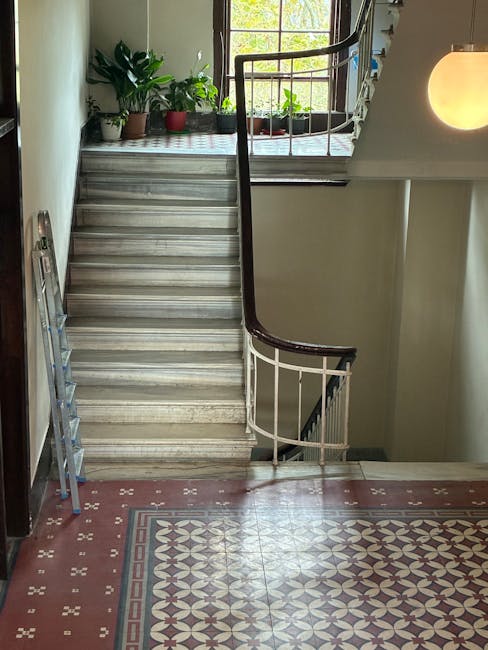
- narrow staircases or awkward landings
- fragile items such as mirrors, glass tables, or shelving
- limited time for loading and unloading
- shared access with other residents
- a parking situation that is only safe for short periods
Students moving out of flats, tenants ending a lease, and small households relocating within London often face this exact setup. If your move is light but access is difficult, a smaller vehicle and an experienced crew can be a better match than a larger truck that struggles to stop nearby. For some people, student removals are a better fit than a full-scale move. For others, a compact removal van or man with van setup is enough.
If you're leaving storage or moving items out of a temporary unit, it can also be worth considering storage as part of the plan, especially when parking and stair access make same-day loading difficult.
Step-by-Step Guidance
Here is the simplest way to prepare for a furniture move with stairs and parking complications. Nothing fancy, just the stuff that saves time and headaches.
- Measure the key items. Check widths, heights, and especially awkward corners. A few centimetres can matter more than you'd expect.
- Measure the access route. Stair width, landing space, front door clearance, and any tight turns all deserve attention.
- Check parking options early. Look at nearby bays, any restrictions, loading zones, and the realistic distance from the vehicle to the entrance.
- List fragile or high-risk pieces. Glass, marble, antiques, and disassembled furniture may need different handling.
- Decide what should be dismantled. Beds, large wardrobes, and certain tables often move better in parts. Sometimes they just do.
- Pack and label the smaller items. This keeps the team focused on the heavy work and reduces confusion during loading.
- Protect the route. Floors, corners, and bannisters may need covering with blankets, cardboard, or other protective materials.
- Set a realistic arrival window. If parking is uncertain, build in a little breathing space. The 8:00 a.m. start can turn into 8:20 very quickly when traffic is being traffic.
- Keep communication simple on the day. One person should direct access questions, not three different people all talking at once.
A good move often comes down to clarity. If the team knows the exact issue, they can solve it. If they are guessing, the day gets slower and messier. Simple as that.
For moves where packing support would make life easier, see packing and boxes or packing and unpacking services.
Expert Tips for Better Results
In our experience, the most successful moves are rarely the ones with the fanciest equipment. They're the ones where someone has thought through the boring details early. The quiet stuff. The door width. The stair turn. The place where the van can actually stop without becoming a public inconvenience.
Tip 1: Start with the biggest awkward item. If a sofa, mattress, or wardrobe will be hard to manoeuvre, test that first. If the main obstacle can't get out, the rest of the plan needs changing.
Tip 2: Keep the stairwell clear. Shoes, bags, recycling, coat stands - all of it slows the team down. Clear space makes the whole property easier to work in.
Tip 3: Take photos of access points. A quick phone photo of the hallway, stairs, entrance, and road outside gives a far better picture than a vague description. It helps the moving team prepare properly.
Tip 4: Protect against the "almost fit" problem. Furniture that just about fits through a doorway can still scrape badly on the way out. Padding and patience help. Rushing does not.
Tip 5: Be honest about parking. If you know the vehicle may need to be parked around the corner, say so. That's not a failure; it's useful information. It changes timings, crew planning, and sometimes vehicle choice.
Tip 6: Ask for access-aware pricing. Some jobs are better priced when the access conditions are clear from the start. If the stairs are steep and the parking is distant, the team should know that before the quote is finalised. For that, pricing and quotes can be a helpful place to begin.
If you want reassurance on handling and protection, it's also worth reading about insurance and safety and the general approach set out in the company's health and safety policy.
Common Mistakes to Avoid
Most mistakes on this kind of move are completely avoidable. The frustrating part is that people only notice them once the van is already parked, the staircase is already full, and someone is saying, "I thought it would be fine." Famous last words, really.
- Leaving parking to chance: Hoping for a space on a busy road is not a plan. It's optimism with a wheel clamp waiting nearby.
- Not checking stair measurements: Many people measure the room but forget the route out of it.
- Ignoring banisters and turns: These are the places where furniture gets snagged or chipped.
- Underestimating item weight: A heavy cabinet is often harder to manage than it looks.
- Failing to reserve enough time: Access issues usually add minutes. Sometimes more.
- Trying to carry too much at once: Overloading is what turns a careful move into a risky one.
- Not telling the team about restricted access: If there is a concierge rule, narrow lane, or timed loading window, say it early.
One quiet mistake deserves a mention: people often forget to clear the destination as well as the origin. If the new place has stairs too, or parking is equally tight, you're only solving half the problem. That can be a rude surprise at the far end of the day.
Tools, Resources and Recommendations
You do not need a warehouse full of kit to make a difficult furniture move work. But the right tools, used properly, do make a big difference.
| Tool or resource | What it helps with | Why it matters |
|---|---|---|
| Measuring tape | Doorways, stair width, furniture dimensions | Prevents the "it should fit" assumption |
| Furniture blankets | Surface protection during carrying and loading | Reduces scratches and knocks |
| Ratchet straps | Securing items in the van | Stops movement in transit |
| Floor protection | Hallways, stair edges, and entrance areas | Helps avoid marks in shared or rented properties |
| Phone photos of access | Stairs, parking, loading distance | Gives the mover a realistic picture |
| Disassembly tools | Bed frames, table legs, shelving | Can turn an impossible carry into a manageable one |
For lighter local jobs, a man with a van service can be practical. For larger or more complex moves, a moving truck or a more structured removal truck hire option may be more suitable. The right choice is usually the one that matches the access, not just the furniture list.
If you are comparing providers, removal companies pages and about us information can help you judge whether the team looks organised, transparent, and experienced with awkward access.
Law, Compliance, Standards and Best Practice
For furniture removals, especially in London, the most important compliance concerns are usually practical rather than dramatic: safe lifting, safe parking, protecting property, and managing the move in a way that does not block others unnecessarily.
Where parking is restricted, the safe approach is to plan the vehicle position carefully and avoid creating hazards for pedestrians, neighbours, or road users. In shared buildings, it is also good practice to respect building rules, concierge instructions, and any loading arrangements that apply to residents or contractors. Those details are not glamorous, but they matter.
Good moving practice also includes:
- using suitable equipment for heavy items
- working with enough people for the load
- protecting walls, floors, and doors where appropriate
- communicating clearly before lifting
- avoiding rushed carrying on stairs
If you are using a professional service, check that it is transparent about safety, terms, and payment handling. Pages such as terms and conditions, payment and security, and recycling and sustainability are useful signs that the business takes its responsibilities seriously.
For customers, the plain-English takeaway is simple: choose a team that treats access as part of the job, not as a surprise. That is the real standard here.
Options, Methods and Comparison Table
Not every move with stairs and parking issues needs the same solution. The right method depends on volume, access, and how much help you want on the day.
| Option | Best for | Strengths | Trade-offs |
|---|---|---|---|
| Man and van | Small to medium furniture loads | Flexible, simple, often ideal for local moves | May be less suited to heavy full-house loads |
| Removal van | Compact access and moderate volumes | Easy to position, practical in tight streets | Limited capacity compared with larger vehicles |
| Moving truck | Bulkier moves with enough road space | Higher capacity, fewer trips | Can be awkward if parking is very restricted |
| Full removal service | Complex home moves with difficult access | More hands, more structure, better for awkward stairs | Usually the most involved option |
| Furniture pick-up only | Single items or small collections | Efficient for one-off pieces | Not ideal if you are moving an entire room or flat |
For a single bulky item, furniture pick up can be enough. For an office or commercial premises with similar access problems, commercial moves or office removals may be more relevant. The logic is the same: match the service to the access challenge, not just the item count.
Case Study or Real-World Example
A very typical Drayton Park move might involve a third-floor flat, a narrow staircase that turns halfway down, and a loading point that is two doors away because the nearest bay is already taken. Nothing dramatic on paper, but enough to complicate things.
Imagine a couple moving out of a rented flat with a sofa, bed frame, dresser, washing machine, and ten or twelve boxes. The sofa is too wide to take comfortably down the stairwell in one piece, so it is checked first. The crew decides to remove the feet and wrap the arms before moving it. The bed frame is dismantled in the flat to avoid scratching the stair rail. The washing machine is carried separately, with the route cleared before lifting begins.
Parking is the real time variable. There is no space directly outside, so the van is parked a short walk away. That means the team loads the heaviest items first and keeps the hallway free. By doing that, they avoid leaving the front door open for too long and keep the move steady.
The result? The job still takes effort, of course, but it does not become a drama. Nobody is panicking. Nobody is arguing about whether the wardrobe "should have fitted." And the building entrance is left tidy, which, to be fair, always feels like a small victory.
This is the kind of move where careful planning is invisible when it works well. That's usually a good sign.
Practical Checklist
Use this checklist before the moving team arrives. A few minutes of preparation can save a lot of running around later.
- Measure large furniture pieces
- Check stair width, landings, and door frames
- Take photos of the access route
- Confirm the best place for the van to stop
- Note any parking restrictions or timed loading windows
- Clear stairwells, hallways, and entrances
- Disassemble bulky items where sensible
- Remove items from drawers, shelves, and cupboards
- Wrap fragile pieces and protect surfaces
- Keep keys, contact numbers, and instructions ready
- Tell the team about any especially awkward item
- Make sure someone is available to answer access questions on the day
Expert summary: the best furniture removals for stair-heavy, parking-tight properties are the ones that reduce uncertainty before the van arrives. Clear access notes, sensible vehicle choice, and honest timing assumptions do more to protect your furniture than any last-minute sprint ever could.
Get a free quote today and see how much you can save.
Conclusion
Furniture removals in Drayton Park can be straightforward, even when the stairs are narrow and parking is awkward, but only if the job is planned around access from the start. That means measuring properly, being honest about the road outside, and choosing a moving method that suits the space as well as the furniture.
The good news is that most of the stress is avoidable. Once the route, the vehicle, and the handling plan are clear, the move becomes far more manageable. A little preparation goes a long way, and in a city like London, that is rarely a bad thing. It's usually the difference between a messy day and one that just gets done.
If you want a move that feels calm, careful, and properly thought through, take the time to plan the access first. That one choice often changes everything.
Frequently Asked Questions
How do you move furniture down narrow stairs safely?
Safe stair moves start with measuring the item and the route, then protecting the stairs and walls, and using enough people to keep the item balanced. Large pieces are often turned, tilted, or dismantled rather than forced through.
What should I do if parking is very limited near my flat?
Check nearby loading spaces, timed restrictions, and possible stopping points before moving day. If parking is difficult, tell the removal team early so they can plan for a longer carry or a smaller vehicle if needed.
Is a man and van service suitable for furniture removals with stairs and parking issues?
Often, yes, especially if the move is small to medium in size. A man and van service can work well when the load is manageable and access is the main challenge rather than the overall volume.
Do I need to dismantle furniture before the move?
Not always, but it usually helps with beds, large wardrobes, shelving, and some tables. If an item looks awkward on the stairwell, dismantling it can save time and reduce the risk of damage.
How far in advance should I plan a furniture removal in Drayton Park?
As early as you reasonably can, especially if parking is constrained or the building has access rules. Even a simple move becomes easier when the van position and route are sorted before the day arrives.
What if the furniture does not fit through the staircase?
That is where careful measurement matters. If an item genuinely will not fit, the options are usually dismantling, using a different route if available, or choosing not to move it in one piece. Forcing it is rarely the answer.
Will the moving team protect my walls and bannisters?
They should, especially where the stair route is tight. Good teams use blankets, covers, and controlled lifting to reduce scratches and knocks. It is sensible to ask how they handle protection before booking.
What type of vehicle is best for a small flat move?
That depends on access and volume. A smaller removal van or flexible transport option is often easier to position on narrow roads than a larger truck, especially where parking is tight.
Are there extra costs for difficult access?
There can be, depending on the time required, crew size, and distance from the vehicle to the property. The fairest approach is to be upfront about stairs and parking so the quote reflects the real work involved.
What items are hardest to remove from flats with stairs?
Bulky sofas, king-size mattresses, wardrobes, glass tables, and heavy drawers tend to be the hardest. They are awkward on turns and landings, and they often need two people or a dismantled approach.
Can I book same-day help if parking is causing problems?
Sometimes, yes, if availability allows and the move is relatively simple. Services such as same day removals can be useful for urgent situations, but access details still need to be clear.
What is the best way to prepare for a move with shared entrances?
Keep the entrance clear, warn neighbours if necessary, and avoid leaving items in shared hallways for long periods. A tidy, respectful approach makes the whole process easier for everyone involved.